We use cookies and analytics to understand usage and improve Thing City. You can opt out anytime. Learn more.
The Myth of Sisyphus is a book of confrontation and defiance. Camus later says we must imagine Sisyphus happy, which I'd happy to imagine! Meursault? He may live without illusion, but also without rebellion or confrontation. He would never be happy. Actually.. do you think he would care?
When I was about to graduate from college, I met a freshman I kinda liked, just because whenever she met someone for the first time, her opening question was, “Why don’t you kill yourself?” what a great way to greet someone huh Not surprisingly, and understandably, most found it as an insult. But she didn’t seem afraid of being disliked. What she cared more is the way people answer to that question. What interested me was that most people couldn’t actually answer the question. Sometimes, when I feel disoriented in life, I randomly open The Myth of Sisyphus. It gives me a similar feeling to get more lost.
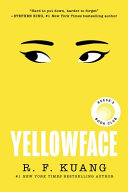
I picked up Yellowface because a Korean stand-up comedian recommended it. I mean.. it felt unusual for a comedian to recommend a novel with serious tones. She said that it was interesting how the author is Asian, yet the main character is white. tbh, I didn’t expect Athena to die so early in the story. 😂 I thought the tension would unfold between two living rivals. However, the novel is less about competition and more about obsession. Of course I didnt like the main character, to say the least. she doesn’t simply envy the Asian writer; she worships her, resents her. At some point, I can imagine the author's ego must have been dissected and worshiped too while writig this story. It feels like the book is playing with that cycle: genius being admired, destroyed
people often treat their dogs better than they treat themselves. I still cannot fully understand why. If dogs are sick, we take them to the vet immediately. But when we are exhausted, what do we do? we call ourselves lazy. Perhaps it is because responsibility feels heavier when it is directed at ourselves? Or perhaps we believe that harshness is discipline?
It made me kept thinking about technology. People in the book fear machines not because machines are inherently threatening, but because they expect them to function perfectly. When a motorcycle breaks down, frustration isn’t about the machine itself. The unexpectedness is what made them frustrated. Sounds familiar? Many people either overtrust ai or fear it. Both assume that it should work with 100% (or smilier to this) certainty. But AI systems, like motorcycles, require maintenance, interpretation, and human engagement. The panic often reveals more about our assumptions than about the technology itself.
I feel like our culture increasingly worships the measurable, thinking what's not measurable doesn't exist, while often neglecting “Quality.” Are our intellectual habits are narrowing rather than expanding our understanding? 🫥
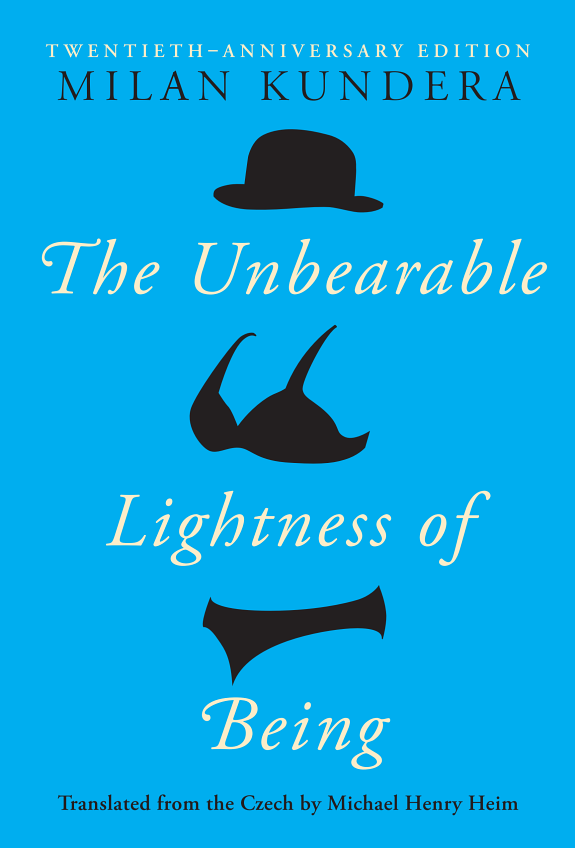
I once heard that there are two kinds of people in the world: those who feel liberated by the empty desert under the vast, starry sky, and those who feel terror. I have always strived to be the first. I "want" to see lightness as freedom rather than abandonment. But perhaps lightness and weight are not choices we make once and for all; they are tensions we learn to tolerate. There is no cosmic rehearsal, no second draft. Perhaps it is not about feeling liberated or terrified. Instead, maybe it's about how much courage we can take to live without guarantees.
It has become one of my rituals to reread this book every five years, without ever intending to. It just turned out that way. The only variable is that I have grown older, yet it almost feels like I am reading a different book. When I first read it in my early twenties, I couldn’t understand Tomas. His detachment felt irresponsible, almost cruel. As I reread the novel over the years, I developed a tolerance for discomfort. I began to see pieces of each character within myself like Tomas’s solitude, Tereza’s longing for weight, Sabina’s instinct to betray anything that threatens to solidify into certainty. (Sabina has always been my favorite.) The novel becomes less about judging them and more about confronting the contradictions I carry contradictions I sometimes want to avoid.
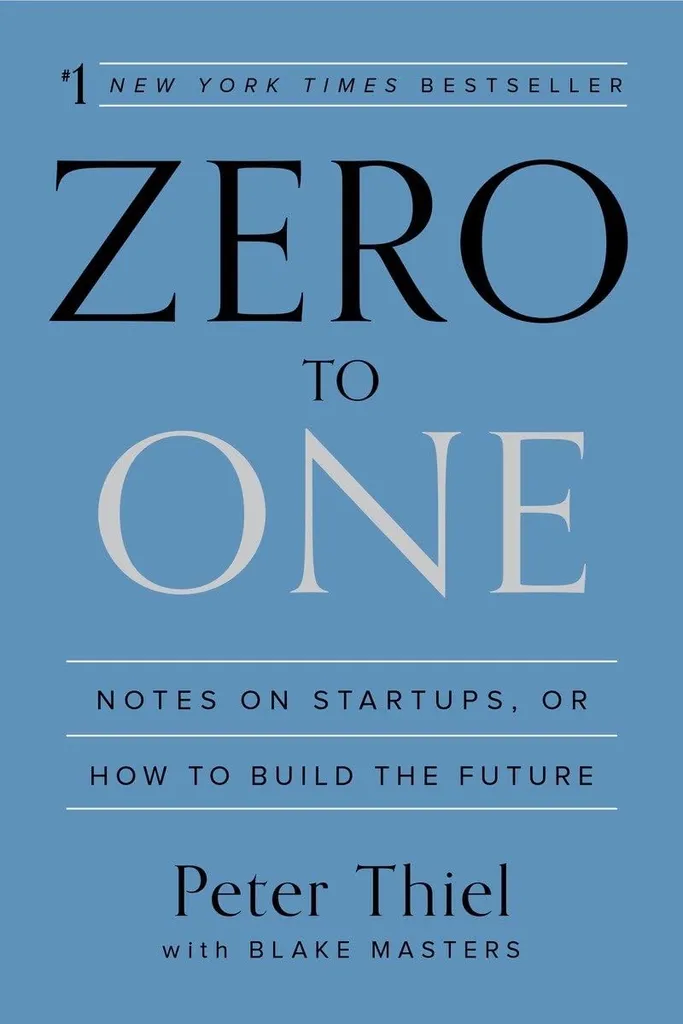
Reading Zero to One was satisfying in a sense that it gave clear language to something I vaguely sensed, though at a much larger scale and with greater depth, of course. It’s pleasant to live in a world where people now casually talk about going from zero to one, or from one to ten 😁